Home Chargers
Best Home EV Charger for Texas in 2026: 4 Level 2 Picks
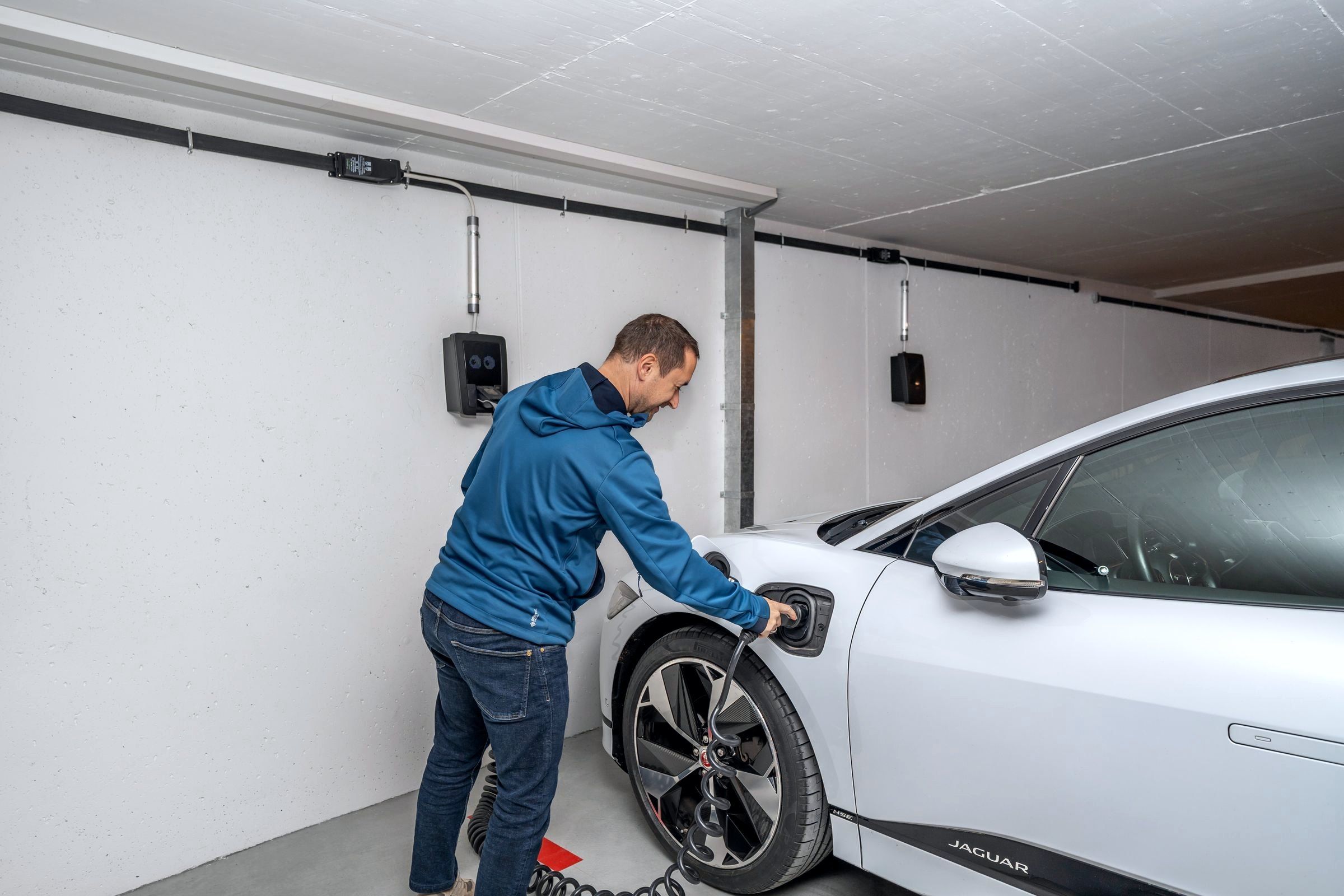
Home Chargers
How we research. We do not run a charger lab. Each guide is built from manufacturer datasheets, official utility, city and state pages, hands-on reviews from outlets that do test, and long-running owner threads — all linked in the sources list. We may earn a commission if you buy through links on this page. See our affiliate disclosure.
The best home EV charger for a Texas garage has three jobs. It has to keep working through a summer in a hot garage. It should earn back money from your utility if your utility pays. And it should still work after the warranty ends. Speed matters less than you think, because most cars sit at home for ten hours a night.
We compared four Level 2 units that Texas electricians put in every week: the Emporia Classic, the Tesla Universal Wall Connector, the ChargePoint Home Flex and the Grizzl-E Classic. We read the spec sheets, the tester reviews and the owner threads. Then we added the Texas layer most national lists skip.
Each pick below links to the maker’s page. Prices change often, so check the live price before you buy. We may earn a commission from some links, and that never changes the order.
Three things changed this year for anyone shopping for a home charger in Texas.
First, the federal charger credit is gone for new installs. The IRS says the Section 30C credit covered property placed in service at your main home from January 1, 2023, to June 30, 2026. It paid 30% of the cost, up to $1,000 per charging port. If an installer still subtracts it from a quote today, ask why.
Second, San Antonio got a new way to get paid. CPS Energy announced EV Smart Rewards on June 25, 2026, run with WeaveGrid. It names ChargePoint, Emporia and Wallbox as eligible chargers.
Third, the plug question got easier. Emporia, ChargePoint and Tesla all sell versions with the Tesla style NACS plug, and the Universal Wall Connector has a J1772 adapter built in.
We do not run a charger lab, and we did not test these units ourselves. This guide rests on three kinds of evidence, and every source is linked at the end.
Then we checked which units can enroll in the Texas utility programs that exist today. Links on this page may earn us a commission. That does not change which charger we pick.
The Emporia Classic is the safe default. It puts out up to 48 amps when hardwired, which Car and Driver lists as 11.5 kW. On a NEMA 14-50 plug it tops out at 40 amps. Emporia lists it from $449 with a 25 foot cable and a 3 year warranty.
Why it wins in Texas: it is one of the three charger brands CPS Energy names for its EV Smart Rewards program. Its sell sheet lists a watertight NEMA Type 4 enclosure and a range of 22 below zero to 122 degrees Fahrenheit. Wirecutter, Car and Driver and InsideEVs have all given it top awards, per Emporia’s own page.
What to watch: the app does a lot, and Car and Driver called it cluttered. If your panel is tight, look at the Emporia Pro instead. Emporia sells it at $599 with load management, which can help you skip a panel upgrade.
Tesla’s Universal Wall Connector is the pick for a home with a Tesla and a non-Tesla car. Its NACS plug has a J1772 adapter built into the handle. Car and Driver notes the adapter locks in place, so it cannot go missing.
Tesla’s spec page lists 12 to 48 amps of output, a 24 foot cable and a Type 3R enclosure. It rates the unit from 22 below zero to 122 degrees Fahrenheit. It is hardwired only, so plan on an electrician. Reviewers list it from about $550 to $650. Tesla’s warranty covers home use for 48 months from the invoice date, the longest of the four.
What to watch: there is no plug-in version. If you want to unplug the charger and take it when you move, pick another unit.
The ChargePoint Home Flex has the most mature app here and up to 50 amps hardwired. Car and Driver lists that as 12.0 kW. On a NEMA 14-50 or 6-50 plug it drops to 40 amps. ChargePoint lists a 23 foot cable and a 3 year warranty. One review put the hardwired price at $539 and the plug-in at $599.
It is also on the CPS Energy list, so San Antonio owners can earn bill credits through the charger. The spec sheet rates it from 22 below zero to 122 degrees Fahrenheit. It also lists a Type 3R enclosure.
What to watch: owners report the Wi-Fi module failing. We cover that in the owner section below. Buy only from a seller ChargePoint authorizes.
The Grizzl-E Classic is a simple box. It has no Wi-Fi and no app, so there is no software to fail. It delivers up to 40 amps, about 10 kW, through a NEMA 14-50 or 6-50 plug. United Chargers lists it at $299.99 with a 25 foot cable.
The maker’s page shows a UL Type 4 indoor and outdoor rating and Energy Star certification. Car and Driver calls its NEMA 4X rating superior. It rates the unit from 22 below zero to 122 degrees Fahrenheit. You can pick a 3 year or 5 year warranty.
What to watch: with no app, it cannot enroll in charger based utility programs. You can still schedule charging from most cars, and that is enough for a free nights plan.
Here is the number that matters more in Houston or Midland than in Portland: the top rated air temperature. We pulled it from each maker’s own spec sheet.
| Charger | Max output | Rated air temperature | Enclosure | Warranty |
|---|---|---|---|---|
| Emporia Classic | 48 A hardwired, 40 A plug-in | -22°F to 122°F | NEMA Type 4 | 3 years |
| Tesla Universal Wall Connector | 48 A | -22°F to 122°F | Type 3R | 4 years (48 months, home use) |
| ChargePoint Home Flex | 50 A hardwired | -22°F to 122°F | Type 3R | 3 years |
| Grizzl-E Classic | 40 A | -22°F to 122°F | UL Type 4 | 3 or 5 years |
The takeaway is simple. No unit here handles heat better than the rest. They all share the same 122 degree ceiling, so heat is a placement problem, not a shopping problem.
A charger on a west facing wall takes direct afternoon sun on top of the air temperature. Mount it on the shadiest wall the cable can reach. If your garage has no vent, a small exhaust fan helps the charger and the car.
Enclosure ratings matter too if the charger lives outside. Type 3R covers rain and sleet. Type 4 and 4X add hose down water, and 4X adds rust resistance. On an open carport near the Gulf, the Emporia or the Grizzl-E has the stronger rating.
Texas has no statewide charger rebate. What exists depends on your utility. Some programs enroll through the charger and some through the car.
CPS Energy, San Antonio: EV Smart Rewards runs through WeaveGrid. The eligible chargers are ChargePoint, Emporia and Wallbox. The eligible cars are Tesla, Jeep, Toyota and Lexus.
You get a $30 credit per enrolled device. Then you get $10 a month if you let the program manage charging, or $5 a month if you manage your own off-peak charging. CPS Energy says that adds up to $120 a year on the managed plan. The program allows up to two devices per home.
Austin Energy: the Home EV Charger Rebate covers 50% of the cost, up to $500, for a Level 2 station that works with Power Partner EV. Check Austin Energy’s list for the exact model before you buy. That list, not the box, decides whether you get paid.
What this means for your pick:
The other Texas programs are in our Texas EV charger rebates guide.
Star ratings hide patterns. Long threads do not. Here is what owners wrote, in their own words where we quote them.
ChargePoint Home Flex and the Wi-Fi module. The most common complaint we found is a Home Flex that stops seeing any Wi-Fi network. One r/evcharging owner said that after a restart, “no WIFI SSID was found,” even after support walked through a reset. Support offered a replacement unit with no ETA. Another owner wrote in 2026 that their unit had been offline “for months,” and that ChargePoint would not pay for the install of the replacement.
ChargePoint and the reseller rule. In a 2023 r/electricvehicles thread, an owner bought a Home Flex from City Electric Supply. After the Wi-Fi module died ten months later, the owner wrote that “ChargePoint wont honor the warranty because CES is not considered as an authorized reseller.” The charger still charged, but the app features were gone.
Why this matters in Texas: a free nights plan only pays off if charging starts at the right hour. If you rely on the charger’s app for that, a dead Wi-Fi module costs money. Set the schedule in the car as a backup. Our Texas electricity plans for EV charging guide shows what the window is worth.
Emporia Classic and a ground fault. One owner on r/evcharging had a Classic for “about a year and a half” before it showed a ground fault error. Emporia asked for an electrician to check the circuit first. The electrician found the circuit fine, and the owner reported a “$275 for five minutes of work” bill that Emporia would not repay. Emporia did offer a new unit, but not the install cost.
Grizzl-E Classic. With no software, the failure points are physical: the plug and the outlet. That is one more reason to use a heavy duty outlet if you go plug-in. Our NEMA 14-50 vs. hardwired guide explains the trade-offs.
Tesla Universal Wall Connector. We did not find a repeated failure pattern in the threads we read. That is not proof it never fails. It just means no single issue came up again and again.
The lesson across all four: makers replace the box, but nobody pays the electrician. Budget for a second service call, and buy from an authorized seller.
Placement decides how long a charger lasts here, and it costs nothing to get right. Walk the garage with your electrician before anyone drills.
Pick the cool wall. The wall that faces the house is often the coolest one. A wall shared with the attic or facing west bakes all afternoon. Put the charger where the sun never hits the case.
Keep the cable off the floor. A 23 to 25 foot cable is long enough for most two car garages. Mount the holster near the charge port side of the car so the cable does not drag. A cable that lies on the floor gets run over, and the plug takes the hit.
Think about the second car. If a second EV is coming, place the unit between both parking spots. Units with load balancing can share one circuit across two chargers, which can save a second circuit later.
Leave room for the electrician. A short wire run from the panel keeps the install cheap. If the panel sits on the far side of the house, ask about a route through the attic before you pick the wall.
Plan for storms. Texas storms cut power often. Every charger here restarts on its own when power returns, but a smart unit may need to reconnect to Wi-Fi first. Check the app the morning after an outage so your schedule still runs.
Not every Texas driver needs one. If you drive under about 40 miles a day and park at home for 12 hours, a regular 120 volt outlet may be enough. Our Level 1 vs. Level 2 guide does the math for each free nights window.
You may also want to wait if you rent, if your panel is already full, or if you plan to move within a year. In those cases, a plug-in unit like the Grizzl-E is easier to take with you than a hardwired box.
Start with your circuit, not the box. The charger can only use what the wire and breaker allow.
A charger needs a breaker rated at 125% of its output. ChargePoint’s spec sheet gives the example of a 50 A breaker for 40 A of output. EVChargerReviews notes that 48 amps needs a dedicated 60-amp breaker and often panel work. If your panel is tight, 40 amps on a 50 amp circuit is fine for most drivers.
Your car’s onboard charger sets the real charging speed. A charger rated for 48 amps will not push more power than the car accepts. Check your car’s AC charging limit before you pay for more power output than it can use.
A NEMA 14-50 plug caps you at 40 amps, about 9.6 kW. Hardwired units can run at 48 amps. A plug-in outlet for an EV also needs a GFCI breaker under code. Hardwiring skips that breaker. See EV charger installation cost for what each path costs in Texas.
Most new cars from many brands are moving to the NACS plug, while older non-Tesla cars use J1772. Emporia and ChargePoint sell both. The Tesla Universal Wall Connector covers both in one handle.
Smart features help when a utility program needs the charger online, or when you want load balancing across two cars. If you only need a schedule, most EVs can set one from the car. In that case a simple charger like the Grizzl-E is enough.
Measure from the charger spot to the car’s charge port, then add a few feet. The charging cable on these four runs from 23 to 25 feet. For warranty, Tesla covers home use for 48 months, the Grizzl-E offers an optional 5 years, and Emporia and ChargePoint list 3 years.
Most of the money is in the circuit, not the box. Our EV charger installation cost breakdown has Texas permit fees and an estimator. If you are not sure you need Level 2 at all, read Level 1 vs. Level 2 charging.
For most Texas homes, the best home EV charger is the Emporia Classic. It is fast when hardwired, rated for the same 122 degree ceiling as its rivals, and it earns CPS Energy credits in San Antonio. Pick the Tesla Universal Wall Connector if two kinds of cars share your garage. Pick the Grizzl-E Classic if you want a plug-in box with nothing to update. Choose the ChargePoint Home Flex for the app, but buy from an authorized seller and keep a backup schedule in the car.
Whatever you pick, mount it in the shade, size it to your circuit, and check your utility’s list before you pay.
| Model | Max output | Rated ambient | Enclosure | Warranty | Cable | Typical price | Retailer link |
|---|---|---|---|---|---|---|---|
| Emporia Classic Level 2 EV Charger (48A) Best value for most Texas garages | 48 A (hardwired) | −22°F to 122°F | NEMA Type 4 | 3 years | — | Listed at $449 (J1772) by Emporia | Check price |
| Tesla Universal Wall Connector Best for mixed Tesla + non-Tesla households | 48 A | −22°F to 122°F | — | 4 years (residential) | 24 ft | About $550–$600 street, per EVChargerReviews | Check price |
| ChargePoint Home Flex (CPH50) Most utility-program friendly | 50 A | −22°F to 122°F (datasheet) | — | 3 years | 23 ft | Around $549 at review time (EVChargerReviews.net) | Check price |
| Grizzl-E Classic 40A Best “no app” charger | 40 A | −22°F to 122°F | — | 3 years (5 optional) | 25 ft | Check current price — usually below smart 48 A units | Check price |
Full 48-amp output when hardwired, a watertight Type 4 enclosure, and eligibility for CPS Energy’s bill-credit program. It is also one of the most-awarded home chargers in tester roundups.
A built-in adapter covers both NACS and J1772 cars, and Tesla backs residential use for four years. Hardwired only, so plan for an electrician.
The highest rated output here at 50 A, and ChargePoint is one of three charger brands CPS Energy names for its bill-credit program. The catch is a long, well-documented trail of owner reports about the Wi-Fi module dying.
A cast-aluminum box with no Wi-Fi to fail. Pick it if your car already handles scheduling and you just want 40 amps on a NEMA 14-50 or 6-50 plug.
For most single car homes, start with the Emporia Classic. It offers 48 amps hardwired, a Type 4 enclosure, a listed price of $449, and it qualifies for CPS Energy's charger based bill credits. Homes with a Tesla and a non-Tesla car should look at the Tesla Universal Wall Connector instead.
All four chargers we compared list 122°F as their top rated air temperature on maker spec sheets. Heat is a placement problem. Mount the unit out of direct afternoon sun, keep the garage vented, and avoid west facing walls where sun adds heat on top of the air temperature.
Only if you can hardwire it on a 60 amp circuit and your car can accept that much power. A NEMA 14-50 plug caps any charger at 40 amps, about 9.6 kW. If your car sits at home overnight, 40 amps already refills a normal day of driving.
You need a schedule, not always Wi-Fi. Most EVs can schedule charging from the car. A charger with an app matters if you want CPS Energy's charger based bill credits, or Austin Energy's rebate for a Power Partner EV compatible station. Otherwise, a simple charger works fine.
Not for new installs. The IRS says the Section 30C credit applied to property placed in service at your main home through June 30, 2026. It paid 30% of the cost, up to $1,000 per charging port. Equipment installed after that date does not qualify.
The Off-Peak Brief
Rebate funding changes, new free-nights plans, permit rule updates, and the occasional charger worth a look. One email a month. Unsubscribe anytime.
Signups are not open yet. If you would like a note when the list launches, email hello@evchargerstexas.com.
A one-page worksheet: panel capacity, circuit size, plug-in vs. hardwired, permit questions for your city, and the utility programs to enroll in.
The checklist will be included when the list opens.